 how-to
How to Find Unique Graphic Tees: A 2026 Guide
Table of Contents
- What Makes a Graphic Tee Actually Unique
- Best Places to Shop for Graphic Tees
- How to Choose a Graphic Tee That Fits Your Style
- Custom Graphic T-Shirts: Making Your Own Design
- Assessing Quality Before You Buy
- Spotting Original Artwork vs. Mass-Produced Designs
- Frequently Asked Questions
Last Updated: October 18, 2026
What Makes a Graphic Tee Actually Unique
A unique graphic tee stands out through original artwork, limited production runs, or designs reflecting a specific perspective rather than mass-produced imagery.
The global custom T-shirt printing market reached $5.2 billion in 2025 and continues to expand, with projections showing growth to $9.8 billion by 2030, according to Grand View Research's Custom T-shirt Printing Market analysis.
Original artwork is created specifically for the garment, often by independent artists or through deliberate design processes. Mass-produced designs rely on stock imagery, overused concepts, or AI-generated content with minimal customization.
When shopping for unique graphic tees, look for designs that tell a story or express something specific. At Popmakesyousmile, we create designs using AI tools combined with creative direction to produce statement-making graphics that stand out from typical retail offerings.
Best Places to Shop for Graphic Tees
Finding unique graphic tees requires knowing how to search each channel. Independent artist platforms reward browsing and following creators, marketplaces reward filtering and reverse image checks, and in-person events reward early arrival and asking the artist directly. Here's a channel-by-channel workflow you can run.
Independent Artist Platforms and Direct Creator Shops
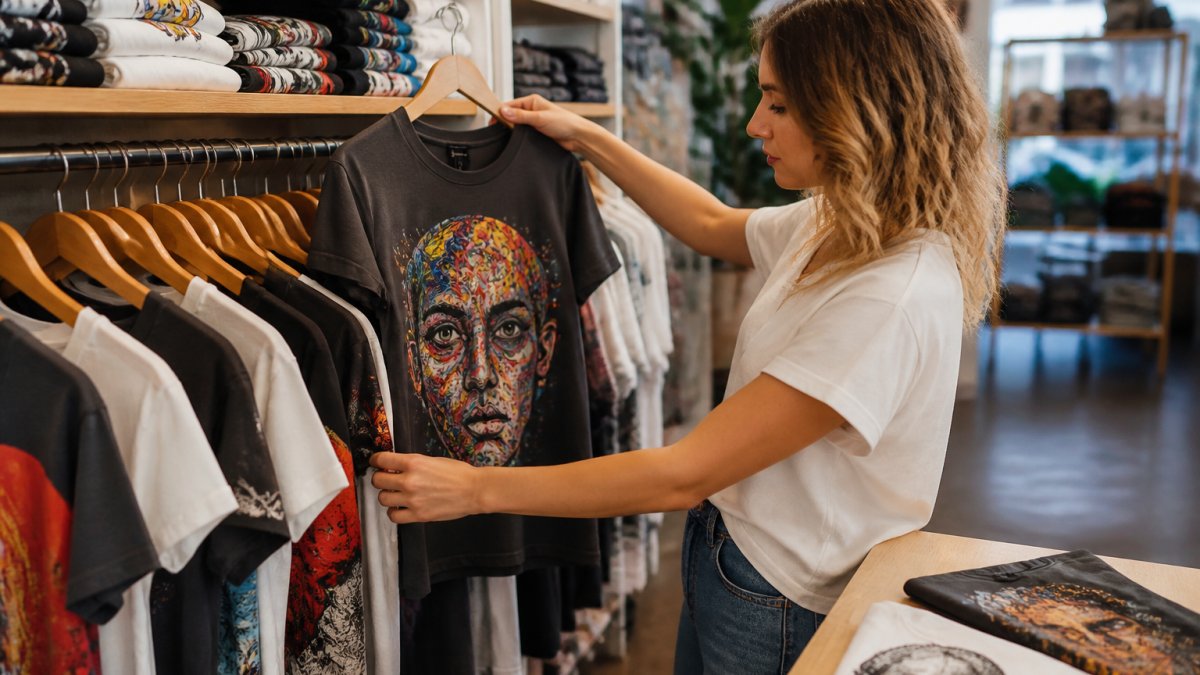
Independent artist platforms and direct creator shops give you access to designs you won't find in mainstream retail. You can browse an artist's full catalog, see their creative process, and often message them about sizing or custom work. Because artists typically produce limited runs, the same design rarely appears across multiple retailers.
A practical workflow for these platforms:
- Search by aesthetic, not by product name. Use the platform's tag or collection filters (for example, "hand-drawn," "linocut," "vintage-inspired," "punk-metal") rather than typing "unique graphic tee," which surfaces the same generic results everyone sees.
- Follow creators, not just listings. When you find one design you like, open the artist's shop and scan their full catalog. Artists with a consistent style across 20+ designs are usually producing original work; shops with 500 unrelated designs are usually reselling.
- Check the drop cadence. Small-run artists often announce releases by email or social media. Subscribing to a few creators' lists is the most reliable way to see designs before they sell out.
Marketplaces and Print-on-Demand Platforms
Large marketplaces (print-on-demand platforms, general e-commerce sites) have the widest inventory but the lowest average originality. The same design is often uploaded by dozens of sellers with minor color or font changes, so search differently.
- Filter aggressively. Sort by newest rather than "best selling," since best-seller rankings reward the most duplicated designs. Use price floors to skip the cheapest mass-produced listings.
- Reverse image search before you buy. Save the product image and run it through a reverse image search. If the same graphic appears on five or more unrelated shops, it's almost certainly a stock or duplicated design.
- Check the seller's catalog size and consistency. A seller with 2,000 unrelated designs is a reseller; a seller with 30 designs in one style is more likely an artist or small studio.
Curated Retailers and Boutique Brands
Curated retailers select designs from multiple sources and present them as collections, offering variety in one place without hunting across dozens of independent shops. They often feature exclusive artist partnerships, limited-edition drops, and seasonal collections, and typically handle quality control, returns, and customer service more formally than individual artists.
The trade-off is that curation reflects a buyer's taste, not yours. Use curated retailers for inspiration and discovery, then check whether the featured artist sells directly, where prices are often lower and runs are smaller.
Vintage, Thrift, and Secondhand Sources
Vintage and secondhand shopping is the most reliable route to a genuinely one-of-a-kind graphic tee, because the supply is finite. Estate sales, thrift stores, and online vintage marketplaces reward a different workflow:
- Search by decade and graphic category (for example, "1990s band tee," "1980s tourist tee," "vintage car graphic") rather than by "unique."
- Inspect for single-stitch construction and cracked-but-intact prints, which are common markers of genuinely old garments rather than modern reproductions.
- Expect to pay for condition. Clean vintage graphic tees in popular sizes command premiums; stained or damaged examples are cheaper but harder to wear.
In-Person Discovery: Markets, Print Studios, and Small-Run Releases
Artist markets, zine fairs, local print studios, and campus art sales offer work that never appears in online search results. Arrive early (small runs sell out), ask the artist how the design was made, and buy directly. Many print studios also sell test prints and misprints cheaply, often more distinctive than their main catalog.
How to Choose a Graphic Tee That Fits Your Style
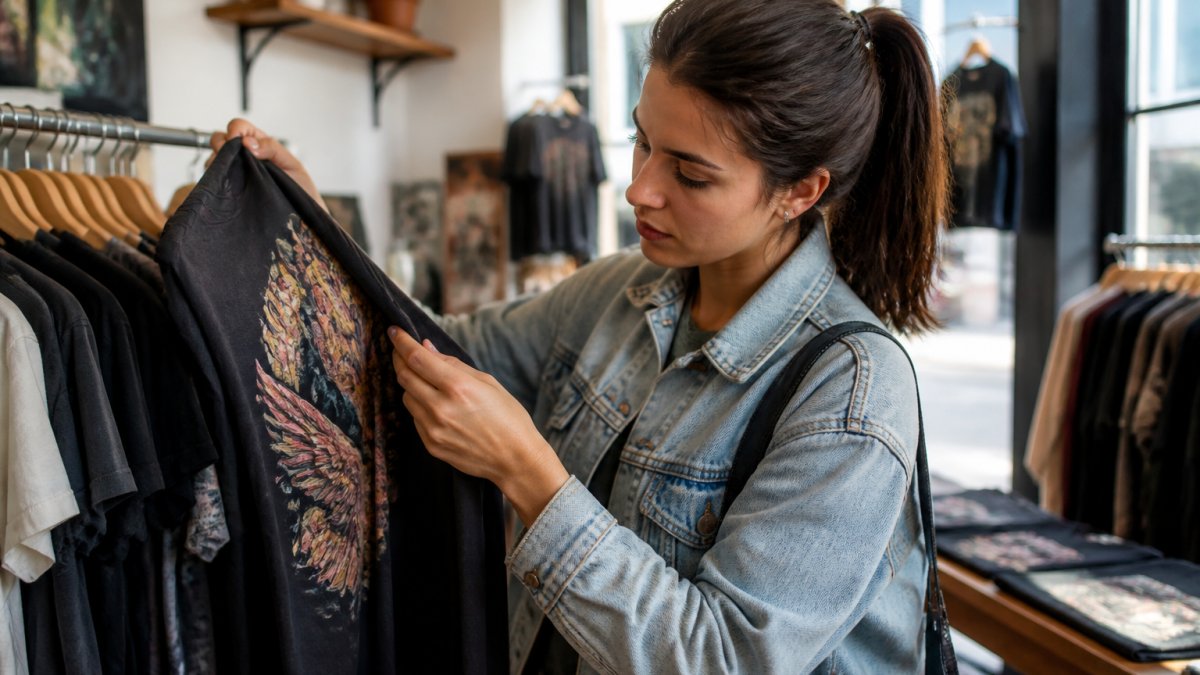
Start by identifying the aesthetic categories that appeal to you. Current design trends include nostalgic styles, bubble lettering, varsity graphics, and punk-metal aesthetics, according to Bonfire's 2026 trend analysis.
Next, think about versatility. A design that works with multiple outfits gets worn more often. Neutral-colored tees with bold graphics tend to be more versatile than heavily patterned or niche designs.
Consider fit and silhouette too. Oversized graphic tees dominate, but they don't work for everyone.
Avoid buying graphic tees based purely on the design without considering how you'll actually wear it. A design you love in a fit that doesn't work for your body type or style will sit unworn in your closet.
Custom Graphic T-Shirts: Making Your Own Design
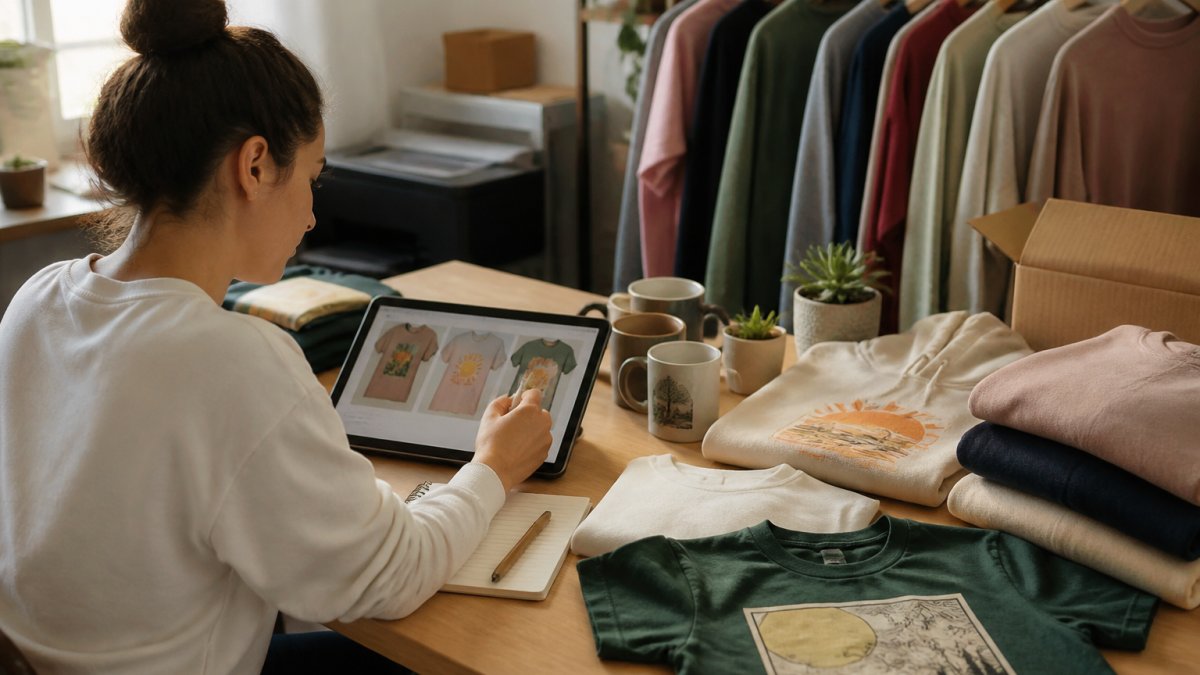
If you can't find the exact design you want, custom graphic tees let you create something entirely your own, with services ranging from simple text-based designs to full custom artwork.
Custom options work best with a clear vision: a personal joke, a family inside reference, or artwork you've already created.
The process typically involves uploading your design or describing your concept, reviewing a proof, then production and shipping.
Custom tees cost more than mass-produced options, but you're paying for originality and something genuinely one-of-a-kind, ideal for gifts, personal projects, or a specific moment or inside joke.
Assessing Quality Before You Buy
Quality separates a graphic tee you'll wear for years from one that falls apart after a few washes.
Print quality determines how long the graphic lasts. Look for crisp edges and even color coverage; blurry graphics or patchy coloring indicate lower-quality production.
Fabric quality matters equally. Heavier tees last longer than lightweight options, and seams should be straight and reinforced.
Check product photos carefully for close-ups of the print, fabric texture, and construction details.
Customer reviews with photos provide real-world evidence of how designs hold up after wearing and washing.
| Quality Factor | What to Look For | Red Flag |
|---|---|---|
| Print Quality | Crisp edges, even color, no bleeding | Blurry graphics, patchy coverage |
| Fabric Feel | Soft, substantial weight, no pilling | Thin, rough texture, loose fibers |
| Seams | Straight, reinforced, even stitching | Loose threads, crooked seams |
| Photos | Multiple angles, detail shots, close-ups | Single generic photo, no details shown |
Spotting Original Artwork vs. Mass-Produced Designs
The hardest part of finding unique graphic tees is distinguishing genuinely original work from designs that only look original. Most shopping guides stop at "look for artist credit." A short verification workflow you can run in a few minutes before buying is more reliable.
Step 1: Run a Reverse Image Search
Save the product image (not the whole page) and run it through a reverse image search engine. What you're looking for:
- One or two results pointing back to the artist's own shop or a single retailer: a good sign of original or exclusive work.
- Five or more unrelated shops selling the same graphic: almost certainly a stock image, a print-on-demand duplicate, or a copied design.
- Results on stock-image sites (the same graphic sold as a vector or illustration): the seller is not the artist.
A common pattern is that mass-produced listings use the same mockup photo across dozens of shops. If the photo matches but the shop names don't, treat the design as duplicated.
Step 2: Verify Artist Attribution
Original artwork typically credits a specific artist, design studio, or creator, while mass-produced designs often have vague or no attribution. When you find a name, search it:
- Does the artist have a portfolio, social account, or shop with a consistent style across many designs?
- Does the artist's own shop sell the same design, or is the retailer the only source?
- Does the artist mention the collaboration or license anywhere?
Legitimate artists usually have a visible body of work. A single design with no other trace of the creator is a warning sign.
Step 3: Check Licensing and Collaboration Language
For pop-culture, band, and brand graphics, licensing matters. Officially licensed merchandise usually states the license or partnership on the product page or in the brand's about section. Unlicensed sellers often use character names or band logos without licensing language, and print quality tends to be lower because the artwork is traced or recreated from low-resolution references.
If a seller can't explain where the artwork came from or whether it's licensed, assume it isn't.
Step 4: Look for Signs of Duplicated Listings
Beyond reverse image search, check the seller's catalog itself:
- Catalog size and coherence. A shop with 2,000 unrelated designs across every niche is a reseller. A shop with 30 designs in one aesthetic is more likely an artist or small studio.
- Listing language. Copied listings often reuse the same description template across dozens of products, with generic phrases like "high-quality print" and no mention of the design's origin.
- Price inconsistency. If the same design appears at $12 on one shop and $45 on another with identical mockups, the cheaper listing is likely a duplicate.
Step 5: Ask About the Design Process
Legitimate creators can explain how a design was made, what inspired it, and whether it's a limited run. Ask directly: "Is this your original artwork, and is it a limited run?" Artists usually answer with specifics; resellers deflect or reply with a template. This is also your chance to ask about custom work or sizing.
A design that looks hand-drawn can still be AI-generated or traced. Reverse image search won't catch every case, so combine it with attribution checks and a direct question to the seller before paying a premium for "original" work.
What Originality Actually Looks Like
Original hand-drawn artwork shows intentional variation, imperfect lines, and stylistic choices that reflect the artist's hand. Mass-produced designs often appear too uniform or combine stock elements in generic ways. Vintage-inspired designs should show authentic aging or deliberate retro styling, not just "old-looking" filters applied to new art.
GQ's 2026 graphic tee coverage highlighted how graphic tees are receiving renewed editorial attention, with focus on cult labels and classic brands that maintain consistent artistic vision.
Frequently Asked Questions
Where can I find unique graphic tees that stand out from mass production?
Independent artist platforms, small-batch print shops, and made-to-order retailers offer genuinely original designs. Look for sellers who feature hand-drawn artwork or limited-edition designs rather than stock templates. Direct-to-creator platforms and niche retailers often have designs you won't find elsewhere. Check the designer's portfolio to confirm originality before purchasing.
How do I choose a graphic tee that matches my personal style?
Start by identifying themes you connect with, animals, food, pop culture, vintage aesthetics, or abstract art. Consider your everyday wardrobe colors and silhouettes. Browse collections filtered by style category rather than scrolling randomly. Read product descriptions to understand the design story and artist intent. Save designs you like and compare them side by side to spot patterns in what resonates with you.
What should I check before buying a graphic tee online?
Verify print quality by checking close-up photos of the artwork. Examine fabric composition and weight. Review sizing charts and customer photos showing actual fit. Check the return policy and shipping timeline, especially for custom or made-to-order items. Look for seller reviews mentioning print durability and color accuracy. Confirm whether the design is original by reverse-image searching or checking the creator's portfolio.
Are independent artist graphic tees better than mass-produced designs?
Independent artist designs typically offer more originality and personal expression than mass-produced alternatives. Artists often invest in quality printing and unique artwork. However, quality varies by creator. The advantage is discovering truly uncommon designs and supporting makers directly. Mass-produced tees from established brands offer consistency and predictable sizing, but limited originality. Compare specific products rather than assuming all independent work is superior.